Country Profiles
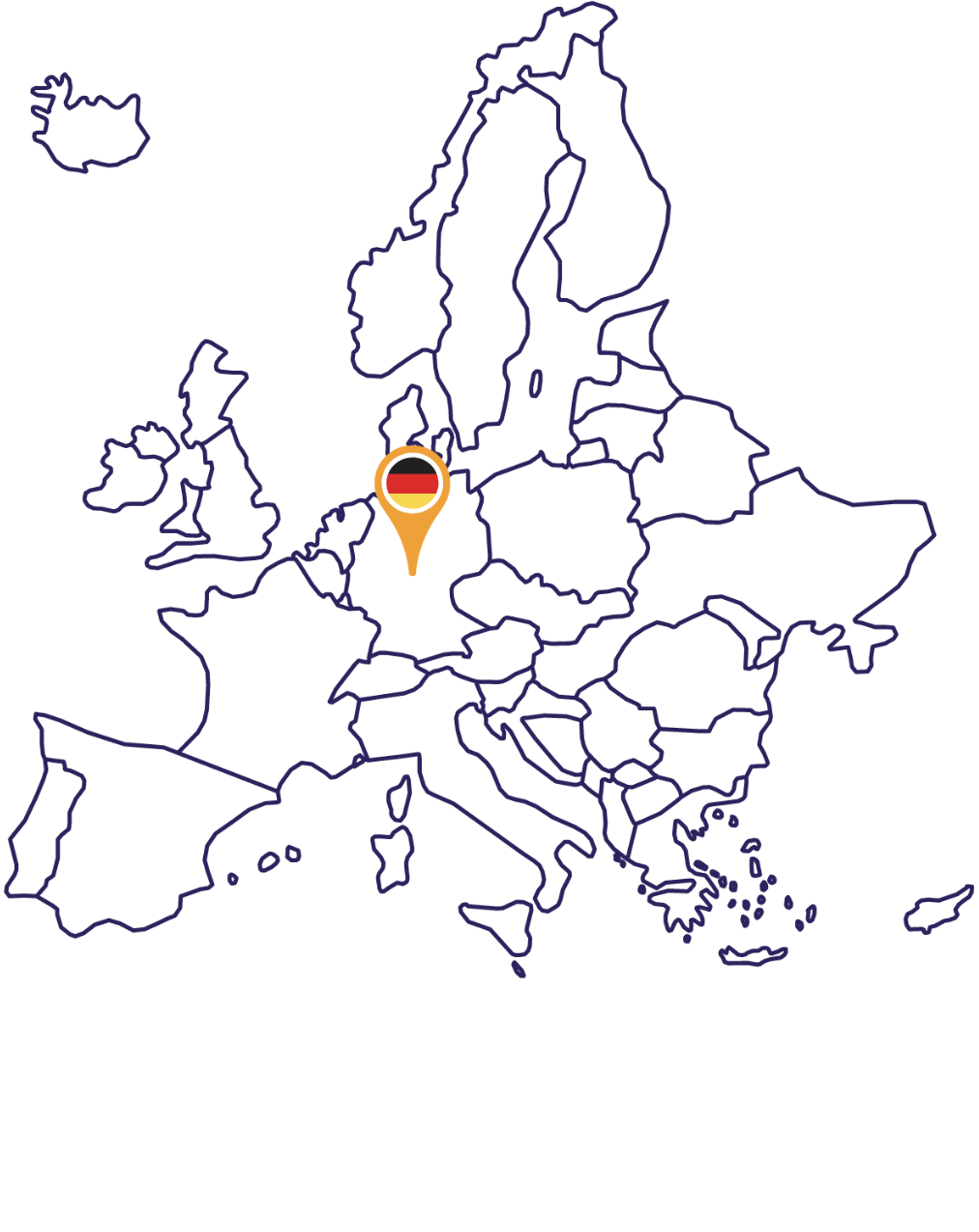
Germany
Context
Since May 2025, Germany has been governed by a coalition of conservatives and social democrats, whose coalition agreement explicitly references sexual and reproductive health and rights (SRHR) as a development priority.
Politically, Development Minister Reem Alabali Radovan has underscored this orientation by joining the SheDecides movement in October 2025, with Germany serving as a SheDecides champion.
Within the German Federal Ministry for Economic Cooperation and Development (BMZ), leadership launched a reform process and presented its outcomes in January 2026. In the health sector, BMZ plans to channel its engagement primarily through multilateral partners, focusing on strengthening girls’ and women’s bodily autonomy and maintaining support for the Global Financing Facility (GFF), UNFPA and the International Planned Parenthood Federation (IPPF). At the same time, tighter overall budgets for German development cooperation are expected, which could affect future allocations for SRHR and family planning. Germany’s overall ODA decreased from 0.82% in 2023 to 0.68% in 2024 (preliminary figure).
Policies & funding
Germany decreased funding to sexual and reproductive health and family planning (SRH/FP) in 2023 by 8%, amounting to 87 million Euros in total. This reduction followed a significant increase in 2022, and represents 0.3% of the country’s ODA. This curtailment had been expected, given the expected reduced contributions to UNFPA and IPPF. Germany continues nonetheless to mostly rely on core funding to benefit SRH/FP. With disbursements of 299 million Euros in total, Germany kept the same level of support to the broader SRHR agenda in 2024.
At the Nairobi Summit in 2019, the German government pledged 100 million Euros annually in bilateral funding for the BMZ Initiative on Self-determined Family Planning and Reproductive Health for All until 2023. The objective of the initiative is to promote self-determination, modern contraception and safe pregnancies and births. Under the previous government, the initiative was extended through 2025 and expanded to include multilateral funding. However, no specific funding target has been set since 2023. The BMZ is currently undergoing significant restructuring, and it remains unclear whether the current government will continue the initiative.
Under the previous government, a range of strategies, guidelines, and action plans were established that prioritized SRHR. This includes the feminist development policy, which formally remains in place and, according to the outcomes of BMZ’s recent reform process, is expected to continue to underpin Germany’s development approach – even if less prominently communicated in public than in the previous government. Other relevant frameworks and strategies, such as the Africa Strategy, the Gender Action Plan, and BMZ’s core theme strategy, also include SRHR and remain valid.

Internationally vocal
Germany has become a reliable supporter of SRH/FP and SRHR for all in the international arena. During the Nairobi Summit in 2019, Germany further demonstrated its political and financial commitment to achieving SRHR for all. As part of the commemoration of the 25th anniversary of the Beijing Declaration and Platform for Action in 2020 and within the framework of the Generation Equality Forum, Germany co-led the Global Action Coalition on Economic Justice and Rights. This is a five-year commitment to help accelerate progress on gender equality. Germany is also engaged on SRHR at the EU level: in 2021, Germany joined the Team Europe Initiative focusing on SRHR in sub-Saharan Africa.
During its G7 Presidency in 2022, Germany, together with its G7 partners, reaffirmed its commitment to achieving comprehensive SRHR for all and recognised the essential and transformative role of SRHR for gender equality. It also mentions the empowerment of women and girls through a feminist development, foreign and trade policy. In the Hiroshima Leaders’ Statement of 2023, the G7 reaffirmed their commitment to promoting SRHR and specifically mentioned Comprehensive Sexuality Education (CSE) in its Statement.

Forecast
The 2025 budget, adopted in September, includes cuts to multilateral partners (including UNFPA and IPPF) as well as to bilateral cooperation. The 2026 budget foresees a slight decrease of ODA resources, and further reductions that will affect SRHR and FP.
Key documents
- Country factsheet 2024-2025-Germany
- BMZ Feminist Development Policy (2023)
- GFFO Foreign Feminist Policy (2023)
- BMZ Priorities – A World in Transition (2023)
- Here you can find more information on Germany’s engagement in the SRHR area (2023)
- BMZ Initiative – Strengthening of SRHR (in German)
- G7 Leaders‘ Communiqué (2022)
- G7 Hiroshima Leaders‘ Communiqué (2023)
- Shaping the future with Africa – the Africa Strategy of the BMZ (2023)
- Gender Action Plan (2023, German)