For more than 18 months, el-Fasher has been under siege. Families who once fled to this city in North Darfur for safety are now trapped in it. Around 260,000 civilians – including 130,000 children – are trapped with almost no aid. Food prices have soared, water is unsafe, and bombardment is constant. Those who manage to escape towards Tawila face attacks and extortion on the road. For women and girls, every stage of this journey, staying, fleeing, or arriving in displacement sites, comes with overwhelming, life-threatening risks.
Across Sudan, the war between the Sudanese Armed Forces and the Rapid Support Forces (RSF) has driven one of the world’s fastest-growing displacement and hunger crises. Starvation is being used as a tactic of war, with el-Fasher a stark example. The scale of atrocities have drawn the attention of UN genocide prevention experts, and all the while, devastation spreads like wildfire. Within this wider collapse, the sexual and reproductive health and rights (SRHR) of women and girls are being systematically eroded.
Gendered violence and SRHR under siege
Women and girls in el-Fasher describe life under siege as “death by missiles, starvation and daily violations”. Families are surviving on animal feed and leaves. Girls often eat last and least, if at all. Malnutrition is rising sharply among pregnant women, new mothers and young children, heightening risks of maternal death, unsafe childbirth, and child and infant deaths.
Conflict-related sexual violence has surged. Reports from el-Fasher and surrounding areas point to horrific crimes of abduction for ransom, sexual assault, and captivity as civilians attempt to move in or out of the city. Young people are particularly exposed, both during flight and in overcrowded camps where lighting, privacy and safe WASH facilities are scarce. Access to post-rape care – including emergency contraception, HIV prophylaxis, safe abortion, and psychosocial support – is extremely limited.
The health system that should protect women’s lives has itself become a target. In October, armed men attacked Saudi Maternity Hospital, the only partially functioning hospital left in el-Fasher at the time. More than 460 patients and their companions were reportedly killed, and six health workers abducted, in what the World Health Organization has condemned as a flagrant attack on health care. Many of those killed and injured were women in labour and newborns.
This is not an isolated incident. Clinics have been looted or destroyed, staff have fled or been killed, and basic supplies, from blood bags to oxytocin, have run out. The result is that women are giving birth at home, on the road, or in makeshift shelters without skilled care. Complications that should be easily managed are becoming fatal. At the same time, contraceptive stocks are depleted, increasing the risk of unintended pregnancies in a context of extreme violence and hunger.
UN Women, UNFPA, WHO and others have documented how these patterns are not accidental but part of a broader assault on women’s rights and bodily autonomy in Sudan. Together they amount to a major rollback of SRHR gains achieved over decades, and a direct attack on the core of the Women, Peace and Security agenda. The WPS agenda recognises that women are disproportionately affected by conflict and must be given space to actively participate, be heard and represented in all peace and security processes. You can read more in UN Women’s explainer on the WPS agenda and in our factsheet on why SRHR must be part of WPS.
Women are being targeted – and often the first to respond
While formal systems collapse, Sudanese women’s organisations and health workers are holding the line.
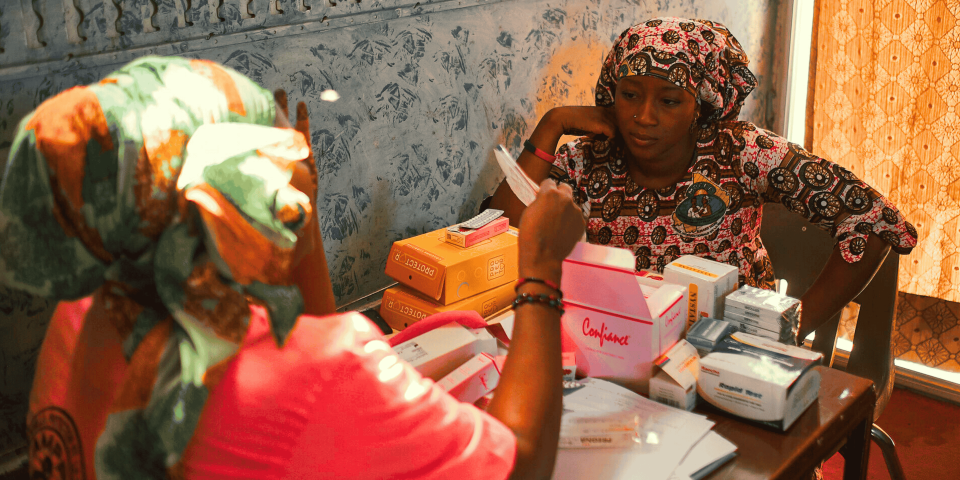
Local groups in conflict-ridden contexts have set up communal kitchens, organised food sharing, and identified malnourished children and pregnant women most in need of support. They provide information on contraception, support survivors of violence, and coordinate safe spaces in displacement camps. These are not external actors parachuting in; they are women from affected communities, doing protection and relief work often without pay or protection.
Sexual and reproductive health services are still being provided in some areas by midwives, nurses and doctors working with Sudanese organisations, UN agencies and international NGOs. UNFPA and partners have supported emergency obstetric and newborn care in sites like Tawila, where many of those fleeing el-Fasher arrive. But insecurity and funding gaps mean these services reach only a fraction of those who need them.
The Sudan Family Planning Association (SFPA), member association of IPPF in Sudan, has been at the forefront of this work. End of October, SFPA reported that one staff member has been detained and nine others remain missing after targeted attacks in el-Fasher; several of its clinics have been destroyed. SFPA had helped to improve Saudi Maternity Hospital’s capacities prior to the October massacre. Despite the loss of colleagues, facilities and equipment, SFPA and IPPF continue to provide SRHR services where they can – often through mobile teams and community networks – and to call for protection of health workers and facilities.
This is the Women, Peace and Security (WPS) agenda in practice: women not only experiencing the worst impacts of conflict, but also at the front of humanitarian response, sustaining communities and demanding accountability. Yet they remain largely excluded from formal decision-making on ceasefires, humanitarian access and the future of Sudan.
What Europe and the wider international community must do
The situation in el-Fasher is not only a humanitarian emergency; it is a test of whether governments will uphold their commitments on SRHR, international humanitarian law, and the WPS agenda during political strife.
We are calling for urgent, concrete steps:
- Put SRHR at the centre of the humanitarian response.
The EU and European governments should increase flexible humanitarian funding for Sudan, explicitly earmarking support for SRHR: emergency obstetric and newborn care, contraception, safe abortion care, and comprehensive clinical and psychosocial services for survivors of sexual violence. Funding must reach frontline providers – including SFPA, women-led organisations and community health workers.
- Protect women, girls and health workers.
All parties to the conflict must immediately cease attacks on civilians, health facilities and humanitarian workers, in line with international humanitarian and human rights law. European governments should press for international investigations into attacks such as the Saudi Maternity Hospital massacre, and support mechanisms to document, prosecute and sanction those responsible for conflict-related sexual violence and attacks on health care.
- Open safe, monitored humanitarian corridors.
The EU and Member States should use diplomatic and political leverage – including within the UN Security Council and regional forums – to secure a sustained ceasefire around el-Fasher and other besieged areas, and guarantee safe, unimpeded humanitarian access by land. Any “humanitarian corridor” must be genuinely safe, including for women, girls and other at-risk groups, and monitored by neutral actors.
- Back women’s leadership and participation.
Women’s rights organisations, including those working on SRHR, must be funded and recognised as essential humanitarian and peacebuilding actors, not as add-ons. European support should enable Sudanese women peacebuilders, health workers and activists to participate meaningfully in ceasefire talks, political negotiations and reconstruction planning, in line with the WPS agenda.
- Sustain long-term SRHR and gender equality funding.
Beyond immediate relief, the EU and European governments should protect and expand development and SRHR funding for Sudan and the region, avoiding cuts or reallocation that would further weaken fragile health systems. Investments should support comprehensive SRHR services, maternal and newborn health, adolescent girls’ health and education, and community-based work to prevent and respond to gender-based violence, including harmful practices such as FGM.
The war in Sudan, the siege of el-Fasher in particular, is exposing just how quickly women’s and girls’ rights can be dismantled when conflict, impunity and neglect converge. It is also showing, once again, that women are central to any meaningful response.
In this devastating situation, we are calling on European countries and the European Union to take urgent action to uphold the rights, health, and dignity of Sudanese people.
Words by Maira De Tollenaere – IPPF European Network
Illustration: Linoca Souza for Fine Acts