Country Profiles
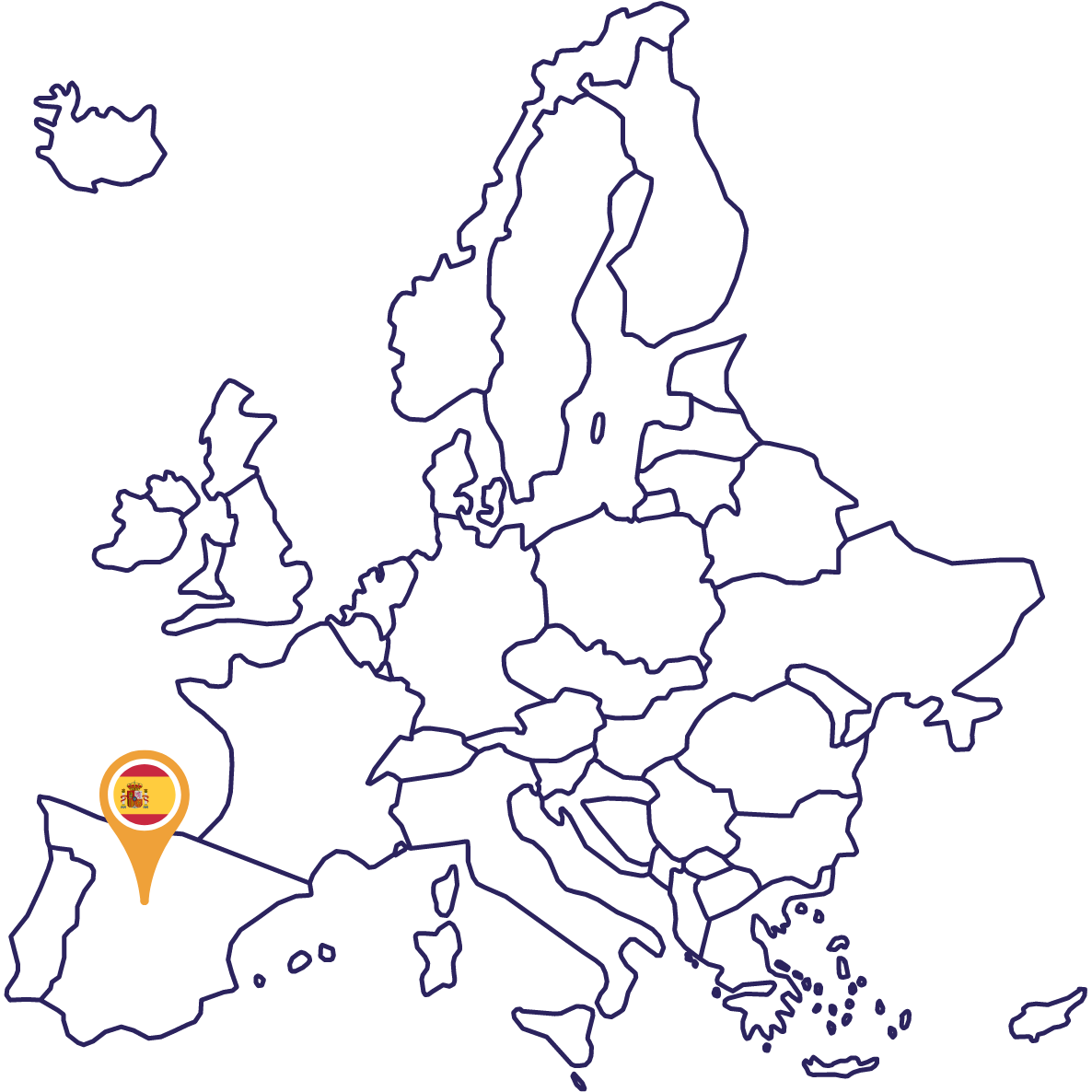
Spain
Context
The progressive coalition government led by Pedro Sánchez is going through a complex political moment, marked by the convergence of important debates both domestically and internationally. At the national level, the debate on the General State Budget (GSB) has become a test of endurance for the coalition government, as well as for the fragile alliances with the nationalist and left-wing parties that support the parliamentary majority.
Despite uncertainty over possible parliamentary support, the government has declared its intention to present a new draft GSB for 2026. At the same time, in the international context, the executive is facing growing pressure from NATO to increase defence spending to 5% of GDP by 2035, which is creating tensions within the government itself and among its parliamentary partners. For now, Sánchez has negotiated an exemption for Spain and reaffirmed the 2.1% target, citing fiscal constraints and social spending priorities. At the institutional level, another source of controversy is the initiative to constitutionalise the right to abortion, following France’s example, in order to protect this right from possible legislative setbacks. The proposal, first put forward by the left-wing Sumar and now promoted by the social-democratic PSOE (Sánchez’s party), is politically coherent with the promotion of sexual and reproductive health and rights (SRHR) within the framework of development cooperation and feminist foreign policy.
Policies & funding

While total member countries of the Development Assistance Committee (DAC) from OECD reduced official development assistance (ODA) by 7%, Spain bucked the global trend by increasing its ODA by 12%, reaching around EUR 4 billion, equivalent to 0.25% of its gross national income (GNI). This is still far from the legal commitment of 0.7% of GDP by 2030, as signed in the Spanish Cooperation Law. Several NGOs claim that the Spanish increase includes ‘inflated aid’ (such as in-donor refugee support), as it does not directly contribute to the development of recipient countries
In June 2025, the Spanish Government approved new voluntary contributions totalling 7.25 million Euros, managed by the Ministry of Foreign Affairs through the Secretariat of State for International Cooperation. Of this amount, the most relevant to SRHR is the allocation of 6.5 million Euros to UNFPA to promote sexual and reproductive health, women’s and girls’ rights, and the eradication of harmful practices such as child marriage and female genital mutilation – in line with the Sustainable Development Goals (SDGs) 3 and 5. The following month, the Spanish Government approved an additional allocation of almost 62 million Euros to strengthen its multilateral cooperation through the Spanish Agency for International Development Cooperation (AECID) with key international organisations in areas such as climate change, gender, migration, food security and humanitarian aid. Of this additional amount, the most relevant to SRHR includes the disbursement of 5 million Euros to UN Women, to promote gender equality and women’s empowerment, and of 4.3 million to UNFPA, focused on sexual and reproductive health, reproductive rights and reducing maternal mortality.
These contributions are in addition to those previously approved in 2025, totalling 150 million Euros be distributed among 42 multilateral organisations, and are in line with the Spanish Cooperation Master Plan 2024-2027 and the 2030 Agenda. They reinforce multilateralism, a feminist approach and sustainable justice in Spanish cooperation policy and in the context of the Financing for Development Conference held in Seville between 30 June and 3 July 2025.
Estimates indicate that decentralised cooperation would once again account for around 10% of total Spanish ODA. The Catalonia and the Basque Country are consolidating their position as the largest contributors to SRHR, given respective support to UNFPA Supplies, We Decide and GBV programmes in Libya, Palestine and Senegal.
The Spanish Government is developing a Feminist Cooperation Strategy within the framework of the reform of Spanish Cooperation promoted by the new Law on Cooperation for Sustainable Development and Global Solidarity, approved in February 2023. This law enshrines the gender perspective as a cross-cutting and distinctive element in Spanish cooperation and establishes as priority objectives closing gender gaps, combating all forms of gender-based violence, promoting the empowerment of women and girls, and protecting sexual and reproductive rights in partner countries. To be noted that the Spanish Government is a SheDecides champion.
The Spanish Government has also continued to view SRHR as an essential component of its broader Feminist Foreign Policy. On 15 September 2025, at the meeting “Defending equality and peace: 30 years after the World Conference on Women in Beijing, 1995”, organised in Madrid by the Women’s Institute together with several CSOs, the Ambassador on Special Mission for Feminist Foreign Policy, Ana María Alonso Giganto, recalled that this year we are commemorating the 25th anniversary of United Nations Resolution 1325, in which the peace and security agenda included a gender perspective, and stated that “the key idea of our feminist foreign policy revolves around this, peace from a feminist point of view, but also to promote relations abroad in which women’s rights, starting with sexual and reproductive rights, are integrated into all documents adopted abroad, which also reflect our actions there.”
In May 2025, Spain also launched its Global Health Strategy 2025-2030, jointly approved by the Ministries of Health and Foreign Affairs. This roadmap reinforces Spain’s international commitment to improving global health through an inclusive, sustainable and human rights-based approach. The strategy’s strategic objectives include promoting health and well-being from a life-cycle perspective, with a particular focus on guaranteeing SRHR. With this strategy, Spain becomes the fifth country in the European Union to adopt a specific global health strategy, aligned with the 2030 Agenda for Sustainable Development and the principles of equity, social justice, sustainability and international cooperation. In this context the Spanish government also increased the contribution to World Health Organisation (WHO) by 5.25 million Euros, as part of a broader commitment of 60 million. Moreover, this year, Spain’s commitment to global health entered a new phase with the country’s election to the WHO Executive Board for the period 2025-2028, after almost two decades of absence.
Internationally vocal
Spain hosted and co-anchored the Fourth International Conference on Financing for Development (FfD4), held from 30 June to 3 July 2025 in Seville, where an agreement was forged among over 190 states to tackle the estimated 4 trillion Dollars (3.7 trillion Euros) annual gap in financing needed to meet the 2030 Sustainable Development Goals (SDGs). At the FfD4 Pedro Sánchez presented the Seville Plan for Multilateralism, an initiative that includes the opening of a United Nations House in Madrid, increasing development aid to 0.7% of GNI by 2030, creating a platform for reforming multilateralism, and promoting debt relief mechanisms and inclusive cooperation.

During the FfD4, Sánchez also presented the Global Health Action Initiative, a joint proposal between Spain and the WHO that seeks to strengthen the international financial architecture for health, promoting a more robust, sustainable and coordinated system that can respond effectively to current and future health challenges. Spain will contribute 315 million Euros to this initiative for the period 2025-2027.
At the high-level meeting held on 22 September 2025 at the United Nations General Assembly (UNGA) to mark the 30th anniversary of the Beijing Conference on Women, Pedro Sánchez announced Spain’s first feminist cooperation strategy and also called for international “resistance to the regressive wave that is unfortunately gaining ground” and stressed the need to “join forces to firmly defend the equality and dignity that makes us all equal.” He recalled that “Commitments must be made in a comprehensive and multilateral manner. Either we all move forward or none of us move forward. And the United Nations system is the legitimate forum for advancing the international gender equality agenda,” he concluded.
At the Fourth Ministerial Conference on Feminist Foreign Policy, held in Paris in October 2025, the Minister of Foreign Affairs José Manuel Albares reaffirmed the Spanish government’s commitment to gender equality, sexual and reproductive rights, and the consolidation of a feminist foreign policy as a pillar of the country’s international action. Albares stressed that the ‘Feminist Foreign Policy is now one of the priority areas of our country’s international projection, as recognized in our 2025-2028 Foreign Action Strategy.’ The minister insisted that “those who attack democracy also attack feminism and the idea of equality, citizenship, and justice on which it is based.” In this context, he announced that Spain will host the next Ministerial Conference on Feminist Foreign Policy in 2026 and affirmed that “next year, progress and equality will continue in Madrid.” In that context, Albares also announced the development of a new National Action Plan on Women, Peace, and Security, as well as the first Feminist Cooperation Strategy.
Forecast
The Spanish government is expected to continue increasing support to SRH/FP and SRHR, according to additional amounts approved by Sanchez’s government allocated mostly to multilateral agencies. UNFPA will be a key recipient in the years to come, both of the national and regional governments.
Key documents
- Country factsheet 2024-2025_Spain
- Law on Cooperation for Sustainable Development and Global Solidarity
- Action Plan for Feminist Foreign Policy 2023-2024
- Master Plan for Spanish Cooperation 2024-2027
- Spanish Global Health Strategy
- Spain-Africa 2025-2028
- Spain’s foreign action strategy 2025-2028
- “Gender in Development” Strategy of the Spanish Cooperation
- Health strategy of Spanish cooperation
- Humanitarian Action Strategy of the Spanish Cooperation 2019-2026
- ‘Spanish Cooperation Joint Strategy to Fight COVID-19’
- Spain’s Femminist Foreign Policy
- Sustainable Development Strategy 2030
- AECID Action Plan 2021
- “Guidelines for a Feminist International Cooperation”. Report of the Gender Working Group of the Development Cooperation Council
- Agenda 2030 – Voluntary National Review 2024